
Scientific & Educational Content
Atrial Fibrillation and Stroke
Have you heard of atrial fibrillation (AF)? This is the most common and often silent cardiac arrhythmia, but it carries a serious and little-known risk: stroke.

Atrial fibrillation is a very common arrhythmia in clinical practice, feared for the risk of embolic complications. In recent years, there has been a significant increase in interest regarding this arrhythmia, with improvements in treatment and prevention of these complications.
Studies show that it is possible to stratify the risk of embolic phenomena based on clinical parameters, currently using the Chads-Vasc score. It is important to note that in this score, the clinical manifestation of the form of presentation of atrial fibrillation (paroxysmal, persistent, or permanent) does not increase or decrease the risk. Regardless of the form, a patient with a high score has an increased risk and may benefit from prevention.
This concept has been corroborated with data from clinical studies. In the Active1 study, patients with different forms of presentation of the arrhythmia were evaluated. At the end of the follow-up, the authors observed that patients with the paroxysmal form had the same risk of thromboembolic complications compared to other patients (with permanent or persistent AF). Thus, even short episodes of arrhythmia carry a greater risk of embolism.
More recently, other data sources have provided further arguments that corroborate this statement. The Assert2 study evaluated patients with artificial pacemakers capable of diagnosing short episodes of arrhythmia. Of the 2,580 patients, who did not have documented atrial fibrillation, 261 presented episodes of atrial tachyarrhythmias (heart rate above 190 beats per minute for more than 6 minutes) during the follow-up of 2.5 years. These patients not only presented more clinically documented episodes of atrial fibrillation but also an increased risk of embolic events.
Another study that drew attention to the importance of detecting episodes of atrial arrhythmias was Crystal-AF3. In this study, patients with cryptogenic stroke (of unknown or obscure origin) were evaluated with an implantable monitor set to detect episodes of atrial fibrillation lasting more than 30 seconds. Prolonged monitoring detected arrhythmias in 8.9% of patients, compared to 1.4% of those monitored for 24 hours in the first 6 months, and 12.4% versus 2.0% at one year.
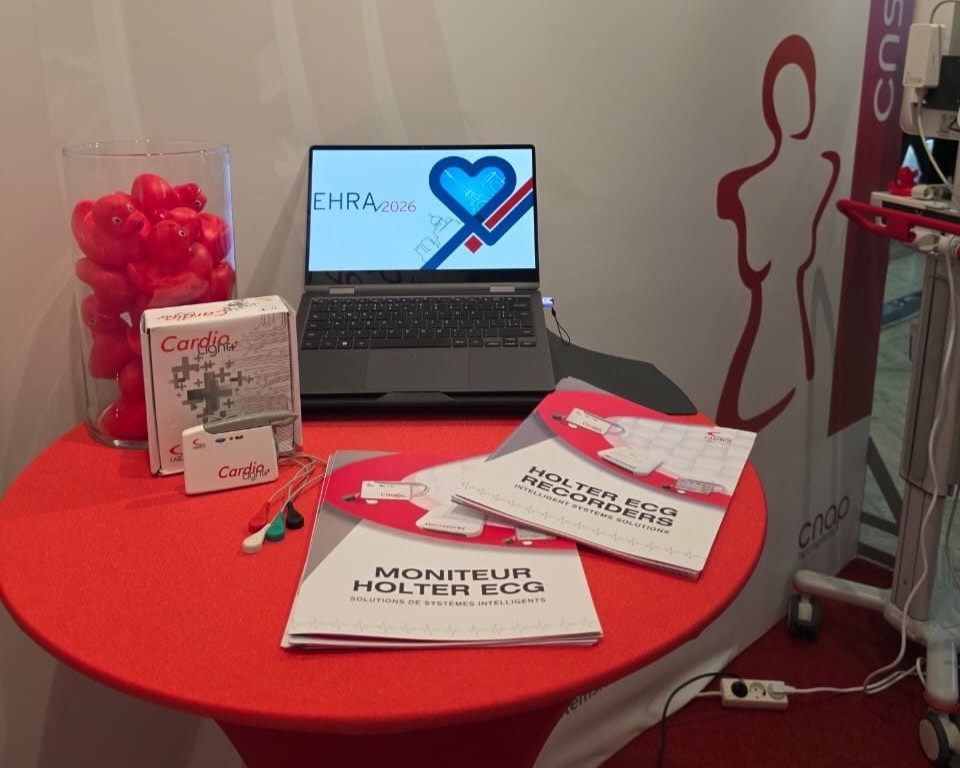
Based on these findings, the use of longer monitoring periods is becoming increasingly common. Devices like the CardioSeven can extend patient monitoring for up to 7 days. This feature has expanded the use of this tool in a simple and practical way.
Even with all this evidence, new questions arise: how much time in atrial fibrillation is sufficient to result in an increased risk of embolic events? What is the most appropriate monitoring time for detecting unsuspected arrhythmias in clinical practice? Is anticoagulant treatment effective and safe for event prevention?
Medical science is like that... The more data, the more questions arise, providing hypotheses for new studies, and thus knowledge grows, leading to better care for our patients.
1. Hohnloser SH, Pajitnev D, Pogue J, Healey JS, Pfeffer MA, Yusuf S, et al. Incidence of Stroke in Paroxysmal Versus Sustained Atrial Fibrillation in Patients Taking Oral Anticoagulation or Combined Antiplatelet Therapy. J Am Coll Cardiol [Internet]. 2007 Nov;50(22):2156–61. 2. Healey JS, Connolly SJ, Gold MR, Israel CW, Van Gelder IC, Capucci A, et al. Subclinical Atrial Fibrillation and the Risk of Stroke. N Engl J Med [Internet]. 2012 Jan 12;366(2):120–9.3. Sanna T, Diener H-C, Passman RS, Di Lazzaro V, Bernstein RA, Morillo CA, et al. Cryptogenic Stroke and Underlying Atrial Fibrillation. N Engl J Med [Internet]. 2014 Jun 26;370(26):2478–86.

Dr. Márcio Jansen de Oliveira Figueiredo
Professor of the Cardiology Discipline, responsible for the Arrhythmia Service at UNICAMP,
Specialist in Cardiology by the SBC, and in Electrophysiology by SOBRAC.